The Hope Project – Building positive futures for people of all ages

Paul and Joanne Westwood arrived in Coseley three years ago with a vision to improve the lives and welfare of people in the community. They are now turning their ideas into a reality, building positive futures for people of all ages.

The Hope Project, presents three very distinct programmes, designed to positively impact the health and wellbeing of people in the community. Music Moves, a music based course supporting the emotional well-being of 11-17 year olds, Living Life to the Full, designed to support people who struggle with anxiety, low mood and depression, and Beauty for Ashes, designed to support survivors of domestic abuse.

We were invited to the celebration and launch of this new charity at their base, New Hope Baptist Church, a welcoming, vibrant and multi-use space located in the heart of Coseley, the perfect destination for three wonderfully different projects.

IMG_20180613_204036246_BURST000_COVER-01

Long before starting the Music Moves programme, Paul and Joanne were working with groups of young people in a youth club setting. They found that the young people came along to the club because they were a little at a loose end or for social reasons, a couple were a little introverted, anxious, and found it difficult to mix and communicate.

When arriving in Coseley 3 years ago, Paul, Pastor of New Hope Baptist Church and musician of 20 years, decided to set up a music club to help young people to socialise, build confidence and play music together. It was at this point he realised how much young people of all backgrounds were communicating whilst playing music together, and the idea behind Music Moves started to grow…

Music Moves has been designed to positively impact the emotional well-being of young vulnerable people. It is a 12-week programme, primarily designed to introduce a new way for 11-17 year olds to cope with anxiety, emotional and physical bullying, and other mental health issues. Using a referral method through schools, health professionals, police and other agencies, the programme will take them on a journey of positive personal growth and development through the medium of music.

Paul said, “The structure of the programme is in three parts. The first 4 sessions we teach the young people to play something within their skill set, the second 4 week period is bringing them together collectively, in a band environment, and in the final 4 weeks we take them into the recording studio to produce a CD or a digital download. This means they will also be introduced to music production.”

Paul has worked with many young people who have experienced bullying in school, cyber bullying and anxiety, he has also worked over many years with young offenders, and understands the challenges faced by young people.

“We hope it will be a preventative model for those who struggle with low self-esteem and other mental health issues, and it will give them something they can do away from their usual environment of school.”

The Hope Project has successfully received £13,000 from East Coseley Big Local to finish equipping a recording studio at the church, and to pay professional musician Dan Healey to run the Music Moves programme. The studio has state of the art equipment that will allow young people to develop their skills in recording and also allow them to learn and master different instruments.

Dan is also a talented musician. During his musical career he has performed with major artists in the music industry and now teaches music at Wolverhampton University. He has a passion to support young people to develop their skills in music, and to help them interact and communicate in new and creative ways.

At the launch we heard a fantastic performance from the Music Moves pilot group, young people that had started out as complete beginners only a few months before, formed a band and had now built the confidence to perform to a live audience.

Living Life to the Full is a life skills 8-week programme, produced by psychologist, Dr Chris Williams, nationally recognised to support people who struggle with anxiety and low mood, and is designed to help people deal with life on a day to day basis.

Joanne was a nurse for 30 years before starting work with the church. “I found that a lot of people found it difficult to say that they were struggling with depression. To say I’m feeling really low or I’m anxious, to come forward and open up was a struggle for some people due to the stigma surrounding it, many had suffered for many years without coming forward. We decided to think about how we could support people with anxiety and low mood and people that suffer from depression.”

“Many people simply try to live with low mood and anxiety.  This can often lead to more severe mental health issues if no interventions are found.”

Joanne and Ruth Carter, also a nurse, working with patients with chronic pain, run the self-referral project together in a group setting, providing useful resources to people that may feel a little low and isolated in the community.

It’s a low intensity and practical programme, that’s not here to replace what the local mental health team does, but to complement it.

Joanne said, “We ran two pilot courses, mindful of those with faith and the struggles that they will encounter, and also those without faith. One of the great things that has come out of this is that one of the ladies wants to set up a peer support group so that there will be continued support for people in the community.”

Beauty for Ashes is a women’s group designed to support survivors of domestic violence who have removed themselves from the relationship. The group gives help, both emotionally and practically, to those who are trying to realise a positive future further on down the line, and in need of that extra bit of support.

Joanne said, “We knew we wanted to work with survivors of domestic violence as we had previously sat on a West Midlands Police steering group and we knew from that group how much of a need there was to do this.”

The aim of the group is to provide an environment of support, concentrating on overcoming personal difficulties that are experienced as a result of abuse and to help women to feel more equipped to lead improved and independent lives, building self-esteem and empowerment. Many of the women who attend will be at various stages in the rebuilding of their lives.

“Even though we are a church some of what we do is non-faith based. We wanted to do both groups. In some faiths there is a distorted belief that the man is the authority in the relationship and it’s difficult for women to come forward and talk about it.”

Joanne has successfully completed Power to Change, a Women’s Aid training course in order to help her to support women to have healthy relationships post domestic abuse. “The name Beauty for Ashes symbolises turning a really difficult and horrible situation into something that is really positive and good.”

Joanne and fellow church member Davinda, will fully launch Beauty for Ashes in the summer of 2019 and will again look at the two groups, those with faith and those without faith.

The Hope Project received support from Dudley CVS around 18 months ago when they first had the idea of setting up the project and the three associated programmes. “We knew what we wanted to do, but we didn’t know how to do it. We were struggling for direction. Becky helped us to identify that a Community Interest Organisation (CIO) was the best route for us, whilst leaving it up to us to decide, she gave us good advice. We had time to question and take it all in, with what we thought was a minefield, she gave us the reassurance and guided us through it at our pace. Lorna, (Dudley CVS) supported us with an application for funding from East Coseley Big Local, she helped us to see our vision more clearly.”

“Dudley CVS gave us knowledge and information but allowed us to find our own direction.”

Paul, Joanne, and the rest of the team radiate enthusiasm and energy, you can see how committed and passionate they are about building positive futures and improving the well-being of local people of all ages.

“Our key ingredients are commitment, a pioneering spirit, compassion and willingness to work hard for no reward. We are non-judgemental and accept people where they are at in their lives.”

For more information on The Hope Project or associated programmes, please contact info@thehopeprojectcoseley.org.uk or visit the website at www.thehopeprojectcoseley.org.uk
Share how you’re connecting older people in your community

team-spirit-2447163_1920Dudley CVS is involved in a small piece of work with Age UK Dudley to help older people make connections in their communities that can combat loneliness, boost health and help people to be more resilient.

We’d like to shout about the great work that is already happening at a small scale, local level in community groups across Dudley borough, celebrate what they’re doing and learn about how we can support more of this type of activity.

If your group is helping older people to stay connected, or you’d like to get started, tell us:

  • What types of activities you do together, if you’re already doing things as a group
  • What more you would like to do – and what’s making it difficult to do more of what you’d like to do
  • What would help you to do continue or extend your activities

For inspiration, you might like to read about what Netherton Regeneration Group is doing to build kindness and social connectedness in their community.

If you get in touch, Helena and I will pay you a visit to help you to shout about the great things you’re up to and to offer you further support. So please, feel free to contact us using the comments section below, emailing smallgroups@dudleycvs.org.uk or calling Becky on 01384 573381.


Restoration of Riverside House: Engaging people in practical activities

Last December, we visited Lloyd Stacey, founder and director of Riverside House, at the beautiful historic site and former early 19th Century ironworks, to meet some of the wonderful people who are transforming the derelict site for the benefit of the community.

As we made our way through the wilderness of woodland located between the Stourbridge canal and the River Stour, we found the team busily clearing rubbish, cutting back the overgrown brash, chopping wood and burning the dead wood over a crackling campfire.

Riverside House has fascinating heritage, history, geology and wildlife. The space includes woodland, a grade II listed house and workshops, a walled garden, a dry dock and narrow boat basin. Lloyd and his team are working to expose the heritage features through clearing the overgrowth, cleaning graffiti and restoring brickwork.

Over the next few years, Riverside House will be renovated and transformed into a heritage centre with gardens, restaurant, crafts shop, woodland and workshops. The idea is to create a place where people can learn and develop skills by transforming the site, in a social environment.

The project aims to help young unemployed adults and young people to participate in practical activities and learn traditional crafts, gardening and hospitality through their involvement of the conservation, preservation and restoration of Riverside House. The joy of learning practical skills have proven to provide outcomes such as improvements in well-being, confidence, self-esteem, social inclusivity, relationship building and physical health. As the project develops there will be more and more opportunities, the idea is to get the whole community using this space, take part in creative art projects and bring back traditional skills such as blacksmithing.

After a quick tour of the site, it was time for tea and biscuits around the campfire, a welcome reward for the team after a couple of hours of hard work! Sitting on handmade benches made from tree stumps, having a chat and a chuckle around the fire with a warm cuppa in hand… it was easy to see why people felt so happy and comfortable here.

We were introduced to Helen Garbett of Artworks for Change, an artist, who has been involved in Riverside House through social art projects, exploring place, natural and cultural landscape, heritage and social change through contemporary art. Helen runs participatory workshops and projects for individuals, organisations and communities that wish to engage in exploratory, creative activities, focusing particularly on those with a disability, caring responsibilities or health conditions.

Helen introduced us to her son Callum, an enthusiastic volunteer at Riverside House who was one of the first to join Lloyd at the beginning of the project, she said,

“When Callum left college, we were looking for things he was interested in doing. One thing that seemed to emerge over time is Callum’s interest in local history and horticulture, so when I got to hear about Lloyd and what he was doing down at Riverside House it just seemed ideal. He now goes 3 days a week and he absolutely loves it, he is so enthusiastic and never misses a day. They have a really tight group.

With autism, social interaction has always been difficult for Callum. Now, he’s having good conversations and feels relaxed with everyone, all of these social things I wasn’t expecting to come out of it has really benefited him. He now feels like he is part of a little community. He has taken ownership, Riverside House to him… well, he feels part of it, and it isn’t just a place that he goes to, he feels like it’s ‘his’ place.”

People from all walks of life have been attracted to the historical site, including historians and archaeologists, volunteers, including a retired builder, a former teacher and many young people with enthusiasm for horticulture, metalwork and woodwork. All sharing their expertise and knowledge.

John, a retired teacher from Stourbridge College, has lived in the area most of his life, walked past the site quite often and didn’t even know it existed until he was alerted to the Riverside project by a friend. He now volunteers 3 days a week and is interested to learn more about the historical importance of the site from the Dudley archives, and share his findings with others.

The former ironworks once consisted of forges, fineries, rolling-mills and foundries which transformed pig iron into casted and wrought iron products. Wrought iron was, at that time, the most widely used form of iron product.

Metal enthusiast, Tom, wearing a safety helmet (one of many from his collection!) has collected all kind of old metals from the site, which we hear he proudly displays in his bedroom!

Whilst we were keeping warm around the campfire, a small piece of scrap metal was found in the overgrowth, one volunteer heated it up, hammered it,  formed it into a small loop and cooled it down in a little pile of snow. You could already see the interest and enthusiasm for blacksmithing!

Riverside House has also adopted the towpath from Canal & River Trust and will be renovating this historically significant section of the canal which includes the entrances to the dry dock, canal basins and crane base.

Riverside has now become a CIC, achieved successful fundraising and has been networking and making connections which have resulted in referrals to other professionals. Dudley CVS supported Riverside House on formation of CIC and charity, writing charitable objectives, business planning advice, fundraising, general advice on recruitment, trustee appointments and volunteer work.

It will be fantastic to see the former ironworks site turn in to a waterside community attraction with café and shop selling local crafts and produce. The journey and all the things that will be learnt along the way will prove the most exciting part!

Read more about Riverside House at www.riverside-house.org.uk

If you would like more information or support for your group please contact Becky Pickin at smallgroups@dudleycvs.org.uk

How many expectations? or 7 years of Social Media Surgeries in Dudley Borough (part one)

There have been social media surgeries in Dudley for more than 7 years.

Since Melissa Guest organised the first on Dec 8th 2010 a varied group of volunteers have run 65 different events in Dudley, Halesowen, Stourbridge and Brierley Hill.  We really didn’t expect this, in fact we expected pretty much nil, nada.

327 of you have signed up for some sort of help,  and we’ve recorded 45 website and social media sites we’ve helped you set up and run. (although we reckon it’s much more than that).A network of committed people have run social media surgeries in Dudley, Stourbridge, Halesowen and Brierley Hill. We even made the news.

Life is likea cup of tea. (2)

These posts are a chance to look at three things…

  1. What is a surgery and how does it fit in with other support for community groups in Dudley and..
  2. What you make of the format – the way of working
  3. What some of you have gone on to do, resting on the skills and confidence you’ve picked up through the surgeries

So lets start with the first…..

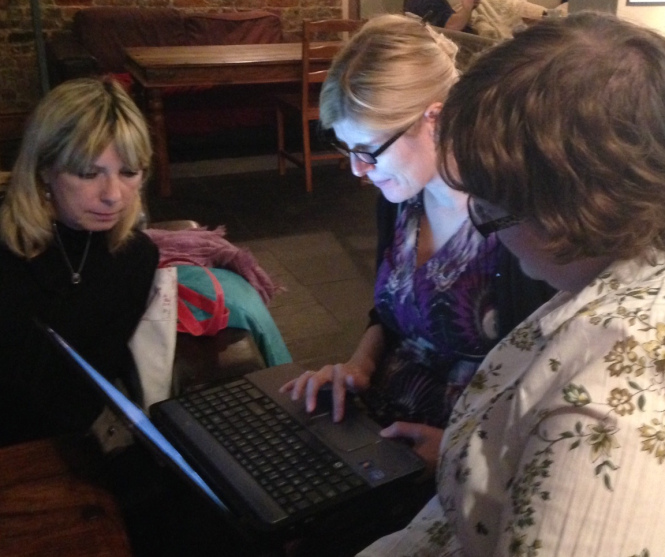
Alison Mel and Becky at a social media surgery in Dudley

Alison Mel and Becky at a social media surgery in Dudley

What are they?

A social media surgery is deliberately informal.

  • It’s a place and a time where people with some experience of using social media can sit alongside local community groups, volunteers and charities and help them make better use of the web.  These places are deliberately relaxed, typically a cafe, where you can talk and think and explore and learn together, and say thank you by buying the person who helped you a quick cuppa.
  • It’s the opposite of training.  You don’t get lectured at. Instead someone will ask you what you are trying to achieve, listen to how you already use the internet and offer suggestions.  If something appeals to you you can dig deeper, together. And it is practical. People will help you set things up, there and then, wwhether on facebook, twitter, a new website.
  • A social media surgery is a loop of generosity.  The surgeries are much more than an expert volunteer surgeon supporting a local community group. They  recognise that helping each other can be far more rewarding than passively receiving help. Whether you think you’ve come to learn or to teach everyone tends to end up sharing what they know with each other.   This is a intentioanl, it’s the loop of generosity.
  • They shrug off key performance indicators and unrealistic aspirations.  Surgeries are run with zero expectations.  They are built on a principle that expectations often lead to disappointment.  If you think 20 people ought to come, but ‘only’ 10 do then you end up demoralised. You may even give up.  Zero expectations means that even if one person is helped that’s a win, 10 turning up is a spirit-lifting-humdinger-of-a-fantastic-thing.  By taking this approach they are more fun to do, so more likely to be there, so better able to help.
  • A social media surgery is a platform.  By providing a space for people to share skills the surgeries underpin so much other work. They help boost the flow of civic information within a neighbourhood and across the internet.  This can be about local services, activities, events, campaigns. It can be information from the third sector or the public sector. It can also be the possibilities tied up in relationships people nurture through being able to share and support each other online.  It can also be the unexpected happenings that spring up because people get to be in the same space and learn together.    All this nurtures connections and grows the civic conversation online.  Upon those connections and those conversations can rest a more vibrant, richer place to live.

The surgeries are run by a group of committed people, some may happen to work for the CVS, but the surgeries sit in a wider movement of people who simply want to share digital skills, for free, with local active citizens.

For your next social media surgery please look at www.socialmediasurgery.com. 


Building kinder communities in Netherton

I’m really pleased that one of the small charities that Dudley CVS has supported has been awarded funding from one of Dudley Council’s Community Forums (Netherton, Woodside and St. Andrews and Quarry Bank and Dudley Wood Community Forum) to set up a pilot project to help people build important social connections where they live.

Members of Netherton Regeneration Group, which we supported to gain charity status, had this to say about their plans:

Netherton Regeneration Group is setting up a pilot in the Darby End area to train volunteers to help lonely people to get out and about. We are setting up a network of street champions and lots of interesting and healthy activities open to all comers. We want to help people who are not able to get out easily, have lost touch with friends, need something to get them moving, get help with health problems, find out about healthy foods and exercise, but mainly to have some fun!

We have been awarded £2,300 from the Community Forum and hope to win some more funds through DMBC’s Innovation Fund for the Voluntary Sector.

Our idea is simple!

We will create a regular support group, to help people become more active and less isolated. People will be offered lots of fun activities including:

  • cooking food together
  • having a cup of tea and a chat
  • making new friends
  • learning to grow plants and vegetables
  • cooking easy, healthy meals and sharing them
  • taking part in healthy walks
  • arts and crafts activities
  • playing games and having a good time!
  • practical community work to make Netherton a better place to live and work
  • setting up a patients’ garden in the Health Centre courtyard over the next year! Instead of looking at weeds, we will be able to see fresh flowers and herbs that we have grown!! Funds are being provided from the Health Centre’s Patient Participation Group Purse to set up the garden.

Volunteers are needed now!

We will be training ten volunteers to help us run the programme and they will get free First Aid and Food Hygiene courses provided.

If you’re interested in helping to make any of this happen, please contact us using our Facebook page and letting us know what kinds of things you’d like to help with.

NRG

A couple of local volunteers working with our Trustee, Chris, to tidy up Joe Darby’s statue in Netherton Centre last summer.

There’s been a marked increase recently in conversations around social connectedness and how that builds individual and communal resilience, combating loneliness and isolation. At national level the Jo Cox Commission on Loneliness and its #Happytochat campaign, research done by Carnegie Trust and the Joseph Rowntree Foundation on the place of kindness in communities and yesterday’s creation of a ministerial post on loneliness all point to a rising understanding that belonging and social connectedness are crucial for health, wellbeing and prosperity. The Chief Executive of NCVO (National Council of Voluntary Organisations), Sir Stuart Ethertington has also made a strong statement of our sector’s central role in building a sense of belonging and connectedness.

More locally, these messages have been repeated:

I’m really pleased that Netherton Regeneration Group is thinking about how its members can help people to get involved with building kinder communities and I like that there are lots of different opportunities to participate.

I’m sure there are lots of other ways people are building links with each other across Dudley borough, whether that’s on an individual level or through a group or charity. If you’re inspired to get involved, get in touch with Netherton Regeneration Group through its Facebook page or get in touch with us if you want to be linked to people doing good things somewhere else in Dudley borough.

Nurturing caring, vibrant and caring communities – A snapshot of our story over the last year

We are really pleased to share the work that our Dudley CVS team have been doing over the past year in our most recent annual review. The 2016-17 review is a snapshot of the work we’ve done between April 2016 and March 2017 to support individuals, communities and organisations across Dudley borough.

Take a look at our annual review website and read about how we’ve been connecting and inspiring people and organisations to achieve positive change and championing their work.

Or, if you would like to read a short snapshot of our story, you can download our pdf version by clicking on the image below:

I hope you enjoy learning about the work we’ve been doing over the past year. If you’ve any feedback please feel free to leave a comment!

Be part of our collective story and share how you’ve been involved in our work or how you would like to get more involved! #dcvstory

Feelgood Choir has plenty to sing about: Grant funding success!

The Feelgood Choir really does have something to sing about, after being awarded a grant from Awards for All!

I’m really pleased to have been able to help the Feelgood Choir to get established and to access some funding to give it a great kick start!

The Feelgood Choir originally started as Dudley Mind Feelgood Choir, with the idea that group singing could be a wonderful aid to mental health. The choir regularly sang at shows and events, including at two Dudley Volunteer Awards where they really revved up our attendees.

Late last year, two choir members contacted me to explore the idea of setting the choir up as an independent group that might be able to manage itself and make it more sustainable. Due to cuts to the voluntary sector, Dudley Mind could offer the choir limited support and a free venue for rehearsals, but could no longer cover all the costs involved with running the choir.

I got together with Jan and Val and talked them through setting up as a voluntary group. I helped the group get set up on a firm footing by explaining the role of the committee and helping to develop the constitution.

The next step was to think about planning the group’s work so that we could identify what difference the group wanted to make to people’s lives and how it would do that. This also involved thinking about what costs were involved so that any funding application we worked on would be as detailed and specific as possible. We came out with a simple plan and I recommended Awards for All as an appropriate funder to approach.

Jan worked incredibly hard on the funding application, putting in research, stories from members and learning from running the choir with help from Dudley Mind. I was on hand to review the application and make some suggestions for improving it so that it was completely clear. It was a great application; you can always spot a good application but these days the competition is so tough that there’s never any guarantee.

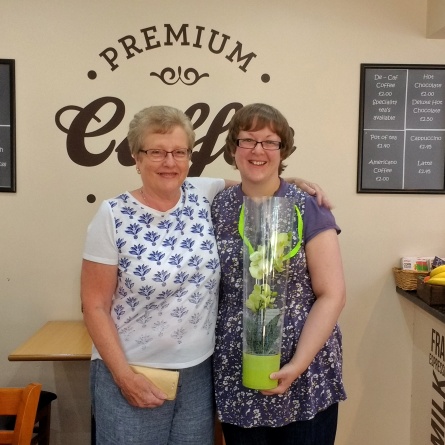
feelgoodAfter a few months of waiting and nailbiting, we finally heard the great news! Jan popped into our July DY1 drop in, with a beautiful orchid and a beaming smile to say thank you for the support. It really was a pleasure to help them and Jan should get great credit for all of the commitment she’s put into making it happen.
While working on the bid, Dudley Mind had to close Dove House where the Feelgood Choir rehearse because of further cuts to its funding. Thankfully, the Feelgood Choir was able to secure another venue – DY1 itself! – to continue rehearsing and now it has room for many more members. So if you’d like to join a fun, welcoming group, you can go along at 6.15pm on Wednesday evenings (except in August). It’s £4 per week and no experience is necessary. They don’t do auditions either; everyone is welcome.

The Feelgood Choir is also holding a summer fundraiser on Friday 21 July, 6.30-9pm at the Carlisle Centre in Stourbridge. Admission is £5 and you’ll enjoy homemade cakes, a quiz and of course performances from the choir itself. For more information on this event and to learn more about the Feelgood Choir, visit its lovely website: feelgoodchoir.co.uk

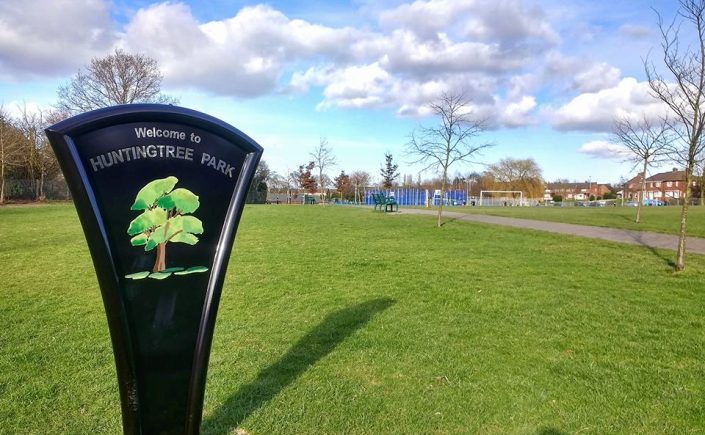
How communities can breathe life into their green spaces: Friends of Huntingtree Park

I’m really pleased that one of the first groups I worked with since joining Dudley CVS, has now become a charity and it was lovely to pay them a visit earlier this week to see how they were getting on.

Friends of Huntingtree Park started in 2006 to address issues of antisocial behaviour in and around the park, which was causing the park to be underused and therefore unloved. Supported initially by my Dudley CVS colleague Kate, the Friends set up a simple constitution to formalise themselves as a voluntary group. They were also supported by a network of ‘Friends of…’ groups across Dudley borough and the local authority’s Parks Development team.

Friends groups are all sorts of shapes and types of not-for-profit organisation. Some are simple voluntary groups that don’t have much paperwork (in fact, many start this way), such as Friends of Grange Park, which I’ve helped to get set up in the last few months; others are registered charities and incorporated in some way because they have taken on more responsibilities. Some Friends of Parks groups work alongside the local authority to help keep their park looking attractive; some manage buildings on the park; others put on all sorts of events; some try to raise funds to improve facilities on the park; others do a combination of all of these things! Some groups focus on things like nature and biodiversity; others focus on health and social activities. It really depends on what kind of park and facilities are there and of course, on the kinds of things local people want to do on that particular park. I’ve met people from lots of different Friends groups and it’s clear that they have something in common. They all love their local green spaces and understand how important it is to protect them!

When I started working with Friends of Huntingtree Park in 2008, they were a simple voluntary group with a constitution and a determination to make their park an attractive environment that everyone could enjoy. Group members were passionate about involving children in the park, believing that if children had a sense of ownership in the park, the park would be loved for years to come.

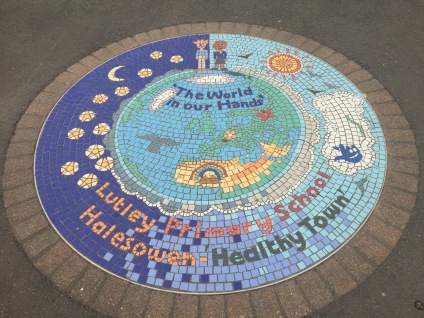
FOHP Mosaic

Friends of Huntingtree Park planned a lovely project with Huntingtree and Lutley primary schools; bringing in borough artist, Steve Field, to design and make two mosaics which would be installed at the park’s entrances. I helped the group to access £10,000 in grant-funding from Awards for All and the now-defunct Grassroots Grants programme. The mosaics were installed and they still look beautiful!

Nowadays Friends of Huntingtree Park continue their association with the local schools and regularly plant flowers and trees with their pupils. On top of that, the group has good links with Halas Homes, whose community also gets involved in projects on the park.

Huntingtree Park was chosen as one of the five ‘Healthy hubs’ in Dudley borough’s Healthy Towns initiative; the Friends think that having a really active Friends group was crucial to Huntingtree Park being chosen. Being a ‘Healthy hub’ meant that the park benefited investment of staff and money that allowed the MUGA (multi-use games area), outdoor gym and other facilities to be developed and many healthy activities to run in and from the park’s activity centre.

The park also has a bowling green where people of different ages and abilities get together for a game. The green was previously managed and maintained by Dudley Council, with bowlers paying the Council for access. The Friends of Huntingtree Park has built relationships with the bowlers over the years, helping to purchase equipment and promoting the sport as something anyone can get involved in.

Late last year, the bowling green at Huntingtree Park came under threat due to public sector budget constraints. The Friends group entered into discussions with the local authority and the bowlers to explore how the green could be saved and maintained in the future. Everyone agreed that the Friends of Huntingtree Park could manage the green on lease from the local authority. At this point, the Friends recognised that it might be the right time to alter how the group was set up to get them on the right footing for taking on this extra responsibility. That’s when the group asked me for some support to think about how they could develop.

I met Alan, Lynda and Jane from the group and we talked about how it might work, what could go wrong and how the group could reduce that risk. We looked at budgets and the pros and cons of charity registration. We also discussed appropriate legal structures that might offer group members more protection when their liabilities increased. With some consideration, group members decided to set Friends of Huntingtree Park up as a CIO (charitable incorporated organisation), which would give them the benefits of charitable status and a corporate structure that would give them some protection.

The process involved developing a new constitution for the group; we did a fair amount of working getting the group’s charitable purposes (its reasons for existing) just right so that the Charity Commission would accept them. Once the constitution was ready, it was time to work on the application. I worked with Alan and Lynda on this and the application was submitted after a couple of meetings. We were really pleased when the Charity Commission confirmed a few weeks later that Friends of Huntingtree Park was now a CIO!

In the meantime, the Friends group and the bowlers were working together and with the Council to help a smooth transition. When the heads of terms for the lease came from the Council, the group was able to plan with real figures and it looked very positive! The group was able to pay a modest sum per year for the lease, engage a groundskeeper who would do routine maintenance. The bowlers agreed to transfer their subs from the Council to the Friends group to ensure that the green can be used for years to come.

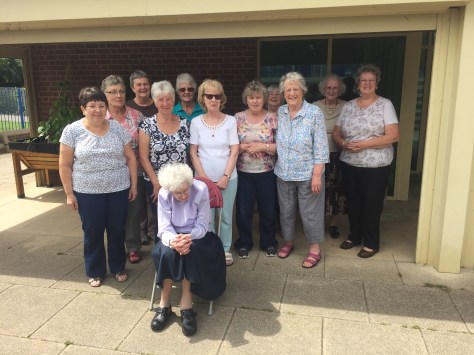
FOHPAnd as Lynda walked us around the park earlier this week, it seems clear why this is working beautifully; it’s the relationships that the members of the Friends group have built with bowlers, residents, schools, park rangers, people from other groups. Everyone seemed to know each other and to have time for each other! It was lovely to meet Colin, a bowler who simply started teaching others to bowl a few years ago and hasn’t stopped since, building a social group that gets together for a game. I met Stuart, the Physical Activity Activator, who told us about his involvement in ShareFest! It was equally a treat to meet members of the social group who meet each Tuesday afternoon for an amble around the park, knitting (the results of which often go to babies born prematurely), coffee, cake and a chat. I was so happy to see the networks and friendships that had developed between everyone and this is something that only needs a few ingredients: open, caring people who want to share their skills and a place where they can do it!


A year of DY1-stop shop!

It’s been a year since Eileen and I launched ‘DY1-stop shop‘, our monthly drop-in for anyone with questions about community groups, charities, social enterprises, getting involved in community activities or volunteering.

Here’s a little infographic that gives you a little bit more detail about the kinds of conversations we’ve been having over the first year!

DY1-stop shop

I’ve really enjoyed working in this way. It’s a non-threatening way for people to make their first contact with us and it’s quite fun not knowing what to expect from one month to the next! I think Eileen and I have both benefited from each other’s differing knowledge and skills, on top of those of our colleagues we’ve been able to call on by virtue of simply being in the same place – thanks to Donna, Nicki, and Melissa from Healthwatch Dudley for being there for us! It’s meant that people have left us buzzing with new ideas, contacts and lines of inquiry.

dy1shot
Most recently, Eileen and I met Cllr Steve Waltho and his wife, Jayne, who are part of a new group being set up to keep alive the legacy of Dudley mountain climber and peace campaigner Bert Bissell. I gave Steve some help with a constitution to help formalise the Bert Bissell Memorial Society and Eileen had lots of ideas for connections the new group could make.

At April’s DY1-stop shop we’ll be joined by our Funding Officer, Martin and Inderjit Nijjer who’s the External Funding and Community Grants Manager on the ESF Programme at Walsall Council. Inderjit will be available to answer any questions you may have about the ESF grants programme.

DY1-stop shop is open on the first Wednesday of every month, 10am-1pm in the coffee shop of DY1, Stafford Street, Dudley. Maybe I’ll see you there soon!

Three new charities in Dudley borough

In the last few weeks, three of the brilliant groups I’ve been supporting have successfully become registered charities, hopefully unlocking further opportunities for each of them. This is great timing, as the inaugural Local Charities Day is coming up on 16 December!

The three charities do very different work, which goes to show the enormous variety of wonderful work that benefits people and communities.

Continue reading